Studio

A small studio,
established 2002.

Ridgewater is a design-build studio in Carmel, Indiana. We accept a small number of commissions each year — most clients return to us for a second property a decade later.

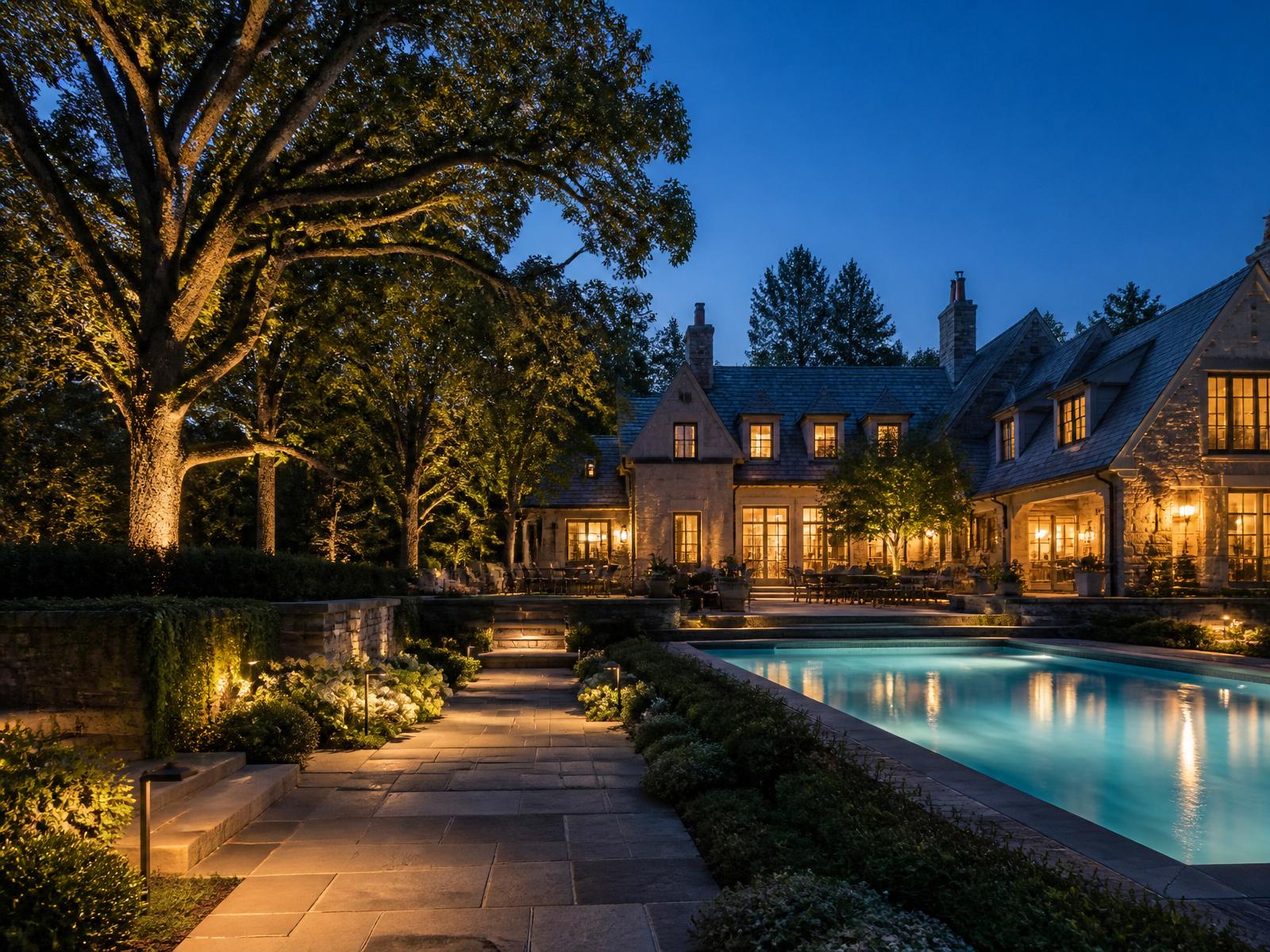
Ridgewater estate project at dusk

Approach

We were founded on a simple idea — that an outdoor environment should feel as considered as the home it belongs to. The pool, the kitchen, the lighting, the planting: drawn by the same hand, on the same set of plans, built by one team.

The work is rooted in the Midwest. We engineer for Indiana's freeze–thaw cycle, plant in native palettes, and source as much stone as we can from quarries one county away. There are no signature flourishes. The work is meant to look like it belongs to the property — and to the region — not to us.
23

Years building in Indiana

180+

Completed estate projects

1

Studio. One team. One warranty.

Materials Library

A deliberately
small palette.

Every Ridgewater project is built from the same considered library of regional stone, weather-honest hardwoods, true metals, and a native planting palette. The shorter the list, the more confidently it ages.

Stone

Stone & Hardscape

Regional limestone, bluestone, travertine and porcelain — set on engineered bases that hold the line through Indiana's freeze–thaw cycle.

Indiana Limestone

Why we use it
A regional stone of quiet authority — the same limestone used on the Empire State Building and most of central Indiana's civic architecture.
How it performs
Dimensionally stable through freeze–thaw, naturally non-slip when honed, sourced from quarries one county away.
Where we use it
Coping, wall capping, steps, fireplace surrounds, formal pool decking.
How it ages
Develops a soft, even patina over a decade; never darkens unevenly.

Pennsylvania Bluestone

Why we use it
A blue-grey sedimentary stone with subtle natural variation — formal enough for a parterre, quiet enough for a courtyard.
How it performs
Thermal finish is naturally slip-resistant; full-color bluestone holds tone through twenty Indiana winters.
Where we use it
Decks, terraces, walkway paving, courtyard floors.
How it ages
Tones soften from blue-grey toward warm grey; veining stays sharp.

Honed Travertine

Why we use it
Cool to walk on in summer, gentle on bare feet, with a Mediterranean depth that flatters water.
How it performs
Premium tumbled or honed travertine is pre-sealed and graded specifically for freeze–thaw — we specify only French- or Turkish-sourced material.
Where we use it
Pool decks, broad terraces, pavilion floors.
How it ages
Mellows from cream to soft ivory; sealed every three years to hold tone.

Large-Format Porcelain

Why we use it
For contemporary architecture — a 24×48 or 32×32 porcelain plank with dead-flat joints that reads as a single architectural plane.
How it performs
Near-zero water absorption, locked color through the stone, dimensionally perfect to within a millimetre per slab.
Where we use it
Modern pool decks, pavilion floors, planter caps, vertical cladding.
How it ages
Effectively unchanged at twenty years — the color you specify is the color you keep.

Architectural Concrete

Why we use it
When a property calls for a single monolithic deck surface — board-formed, honed, or sandblasted to specification.
How it performs
Engineered slabs with control-joint placement designed for Indiana clay soils; integral color stays true.
Where we use it
Contemporary decks, retaining walls, broad terraces.
How it ages
Develops a soft mineral wash over five years; refinishes cleanly.

Clay Brick Accent

Why we use it
An honest regional material — used sparingly, brick anchors a pool to a traditional Indiana home in a way no imported stone can.
How it performs
SX-rated severe-weather brick fired specifically for ground-contact and freeze–thaw exposure.
Where we use it
Coping accents, garden walls, path borders, stair risers.
How it ages
Weathers into the property — softens, never fails.

Quartz Coping

Why we use it
An engineered alternative to natural stone coping when a project demands absolute color consistency.
How it performs
Stain-resistant, freeze-rated, available in honed and bush-hammered finishes.
Where we use it
Pool coping on contemporary projects, wall caps, kitchen counters.
How it ages
Visually unchanging.

Silver Travertine

Why we use it
A pale, cool grey travertine with subtle banding — modern in feel but unmistakably natural; pairs beautifully with bronze and cedar.
How it performs
Vein-cut and filled for dimensional stability through freeze–thaw; honed finish stays comfortable underfoot in July.
Where we use it
Contemporary pool decks, spa surrounds, broad terraces.
How it ages
Holds its cool tone for fifteen-plus years with periodic sealing.

Ivory Travertine

Why we use it
The warmer cousin to silver — a soft cream with honeyed undertones that flatter both limestone and cedar architecture.
How it performs
Premium grade, filled and honed, freeze-thaw rated for the Midwest.
Where we use it
Traditional pool decks, courtyard floors, pavilion floors.
How it ages
Develops a richer ivory patina; never reads cold.

Oklahoma Flagstone

Why we use it
An irregular, rust-toned American sandstone for naturalistic projects — pool surrounds that look as if the water arrived first.
How it performs
Dense, low-absorption sandstone; sound through Midwest freeze cycles when set on a proper engineered base.
Where we use it
Naturalistic pool decks, garden walks, stepping stones, terrace borders.
How it ages
Holds its warm ochre tones; mellows softly across a decade.

Natural Fieldstone

Why we use it
Hand-selected Midwest fieldstone for retaining walls and fireplace surrounds — the most honest stone we work in.
How it performs
Sourced regionally; set dry or with hidden mortar joints for a centuries-old appearance.
Where we use it
Retaining walls, fireplace surrounds, garden walls, water feature backers.
How it ages
Improves with moss and lichen; looks better at year twenty than year one.

Granite Coping

Why we use it
When a pool needs the hardest, most impervious coping available — typically on lakefront and naturalistic projects.
How it performs
Near-zero porosity; thermally finished for slip resistance; effectively indestructible.
Where we use it
Lakefront pool coping, spa coping, exposed wall capping.
How it ages
Visually unchanged at fifty years.

Wood

Timber & Wood

Cedar, ipe, thermally modified ash and white oak — for pavilions, pergolas and ceilings designed to weather honestly.

Western Red Cedar

Why we use it
A pavilion timber with grain, scent, and presence — and one of the few softwoods that genuinely belongs outdoors in Indiana.
How it performs
Naturally rot- and insect-resistant; dimensionally stable across the seasonal humidity swing.
Where we use it
Pavilions, pergolas, soffits, screen walls.
How it ages
Silvers from warm honey to soft pewter over five years if left untreated; holds stain beautifully if not.

Ipe

Why we use it
A dense Brazilian hardwood for decks and seating areas that need to perform under heavy use without complaint.
How it performs
Fire-rated, denser than oak, lasts twenty-five-plus years in ground contact with no chemical treatment.
Where we use it
Pool-edge decking, bench tops, dock surfaces.
How it ages
Oils to a deep cocoa brown; greys to soft pewter if unoiled — both are correct.

Thermally Modified Ash

Why we use it
An American-grown alternative to tropical hardwoods, heat-treated for outdoor performance.
How it performs
Domestically sourced, lower carbon footprint than imported decking, dimensionally stable.
Where we use it
Pavilion cladding, screen walls, soffit panels.
How it ages
Holds a rich chocolate tone; greys gently if left unfinished.

White Oak

Why we use it
For interior pavilion ceilings and screened porches — a domestic hardwood with the formality a traditional Indiana estate calls for.
How it performs
Closed-grain, naturally tannin-rich, takes a deep finish without darkening unevenly.
Where we use it
Pavilion ceilings, custom millwork, screened-porch interiors.
How it ages
Deepens to warm amber under finish; ages slowly and predictably.

Metal

Metal & Hardware

Patinated bronze, marine-grade stainless and powder-coated aluminum — chosen for the long view.

Patinated Bronze

Why we use it
For lanterns, scuppers, handrails — the right metal for anything that the hand or the eye returns to.
How it performs
Develops a true oxide patina instead of corroding; outlives any plated alternative by decades.
Where we use it
Scuppers, handrails, lanterns, fixtures, hardware.
How it ages
Begins bright; greens softly over a decade into a heritage finish.

316 Stainless Steel

Why we use it
Marine-grade stainless for fire-feature burners, pool grates, and any fitting that meets chlorinated water.
How it performs
Resists pitting and chloride corrosion indefinitely; maintains structural finish.
Where we use it
Fire burners, grates, custom railings, equipment housings.
How it ages
Effectively unchanging — brushed or polished, it holds its finish.

Powder-Coated Aluminum

Why we use it
For pergola structures and fencing where weight matters and a fine, even finish is required.
How it performs
Will not rust; powder-coat resists chalking and fading through twenty seasons.
Where we use it
Pergola frames, fences, gates, screen walls.
How it ages
Color-stable through a twenty-year warranty; refinishable.

Stainless Outdoor Cabinetry

Why we use it
Marine-grade 304 stainless cabinetry built specifically for outdoor kitchens — the only honest answer in the Indiana climate.
How it performs
Resists chloride pitting, freeze cycles, and direct sun; soft-close hardware rated for outdoor use.
Where we use it
Outdoor kitchen cabinetry, bar cabinetry, equipment surrounds.
How it ages
Brushed finish softens slightly; holds for twenty-plus seasons with no rust.

Water

Pool Finishes & Planting

All-tile interiors, glass mosaic, pebble finishes and a native Indiana planting palette designed to live for decades.

All-Tile Pool Interior

Why we use it
For owners who want the deepest, most luminous water — a fully tiled interior reads differently in every light.
How it performs
Outlasts plaster by decades; sealed grout system engineered for Indiana freeze cycles.
Where we use it
Pool shell interior, raised spa, waterline.
How it ages
Holds color and depth indefinitely; never needs replastering.

Glass Mosaic Waterline

Why we use it
A glass mosaic band at the waterline catches every shift in light — restrained on a plaster pool, transformative on a tile one.
How it performs
Fired glass color is permanent; UV-stable; impervious to chlorine.
Where we use it
Waterline bands, spa walls, sheer-descent backers.
How it ages
Unchanged at twenty years.

Pebble Interior Finish

Why we use it
A textured, naturalistic interior for clients who prefer the look of a quarried pool over a hotel pool.
How it performs
Lasts roughly twice as long as standard plaster; resists staining.
Where we use it
Pool shell interior, tanning ledges, beach entries.
How it ages
Mellows into the property; resurfaced once, not repeatedly.

Native Indiana Planting

Why we use it
A planting palette drawn from regional natives — switchgrass, little bluestem, oakleaf hydrangea, serviceberry, white pine.
How it performs
Drought-tolerant once established; supports native pollinators; survives Indiana extremes without supplemental water.
Where we use it
Pool surrounds, lake edges, screen plantings, native meadow margins.
How it ages
Improves with each season; richer at year five than year one.

A Note From the Founder

"We are not the largest firm in Indiana, and we don't intend to be. We are trying to be the firm a family calls in twenty years when their daughter is getting married in the backyard, and the pool still looks the way it did the season we finished it."

— Daniel Ridgewater, Founder

Begin a project